How to Improve Home Ventilation for Better Health
Is the air in your home making you feel sluggish, sneezy, or just plain uncomfortable? You’re not alone. Many homeowners notice a difference in how they feel when indoor air gets stuffy or stale. At Colibri Air HVAC, we see it every day—families frustrated by humidity, lingering odors, or dust that just won’t quit.
Bad air isn’t just unpleasant. It can be hazardous. Mold, allergens, and even invisible chemicals can build up indoors, especially when your ventilation isn’t up to par. If you want your home to be a haven, not a headache, let’s talk about how to keep the air moving and healthy.
Why Good Ventilation Matters
Think of your home like a pair of lungs. Without fresh air coming in and stale air moving out, things get clogged. That’s when trouble starts.
- Removes contaminants: Everyday life releases pollutants—cooking fumes, cleaning sprays, pet dander, even the air you exhale. If they stay trapped, they build up fast.
- Balances humidity: Too humid? Mold and dust mites thrive. Too dry? You might get nosebleeds or cracked skin. Good airflow keeps things just right.
- Supports overall health: According to the EPA and American Lung Association, proper ventilation is key in reducing respiratory issues and maintaining comfort.
Well-ventilated homes feel lighter, smell fresher, and even help your heating and AC systems work better.
Quick Safety Checklist 📝
Before you start opening windows or fiddling with fans, run through this quick list:
- Check for gas appliances: Make sure furnaces, water heaters, and stoves vent safely to the outside (refer to local building codes).
- Look for visible mold: If you spot black or green patches, especially near windows or in bathrooms, address them first.
- Change your filters: Dirty filters mean dirty air. Swap them every 1–3 months.
- Test for carbon monoxide: Use a battery-operated detector. If it ever beeps, get everyone outside and call emergency HVAC help.
- Watch for blocked vents: Furniture, rugs, or dust can choke airflow.
Simple Ways to Improve Ventilation
It doesn’t take a full renovation to get better air. Here are steps you can try today:
- Open windows strategically: Create a breeze by opening windows on opposite sides of your home. Even a few minutes a day helps.
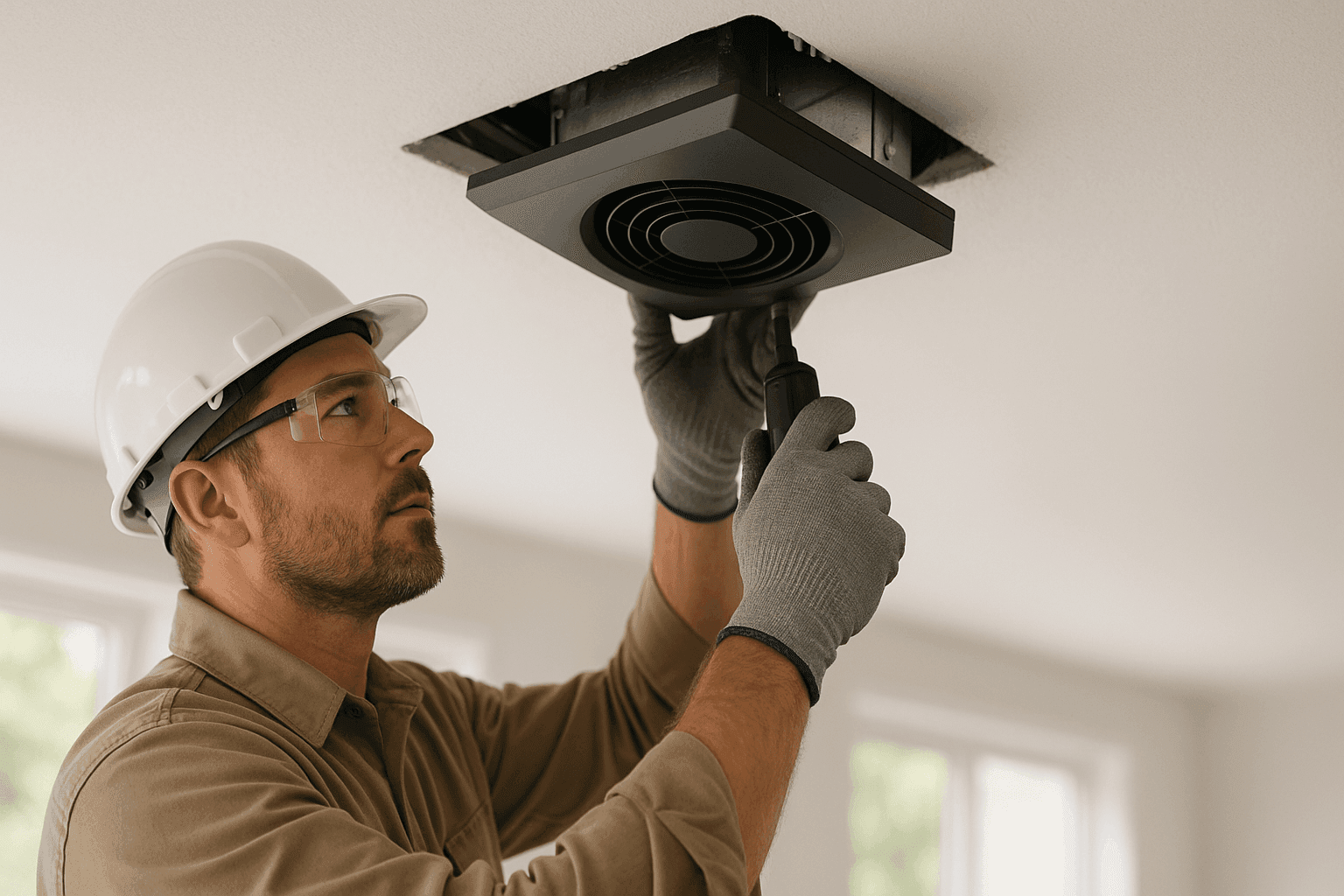
- Use exhaust fans: Turn them on while cooking or showering. They’re small but mighty for removing moisture and odors.
- Whole-house fans: These pull fresh air in and push warm, stale air out. They’re especially useful in mild climates.
- Ceiling fans: Keep air circulating, so no corner gets stagnant.
- Keep interior doors open: This helps air flow throughout your house.
Advanced Solutions: ERVs, HRVs & Beyond
If your home feels stuffy even after trying the basics, it may be time to consider mechanical ventilation:
- Energy Recovery Ventilators (ERVs): These bring in fresh air while keeping much of the heat or coolness you’ve paid for.
- Heat Recovery Ventilators (HRVs): Similar to ERVs, but focus more on heat transfer—great for cold climates.
- Air Scrubbers and Filters: These systems actively remove fine particles, pollen, and even some germs.
A professional can help you find the right fit, especially if your home was built tight for energy efficiency.
DIY vs. Call a Pro
There’s a lot you can do on your own, but sometimes you need a hand:
DIY:
- Swapping filters and running fans
- Opening windows and doors
- Routine cleaning and dusting
- Using portable air purifiers
Call a Pro:
- Installing or servicing whole-house fans, ERVs, or HRVs
- Diagnosing persistent odors or moisture issues
- Custom ductwork or system balancing
- Carbon monoxide or gas leak concerns
If your home still feels stuffy after trying the basics, or if you notice signs of mold or chronic humidity, it’s time to reach out for help.
What Pros Do On Arrival
When a Colibri Air HVAC technician visits, here’s what you can expect:
- Home walk-through: We look for obvious blockages, leaks, or signs of poor airflow.
- System inspection: We check fans, ducts, vents, and filters for clogs or damage.
- Indoor Air Quality (IAQ) testing: Optional, but it pinpoints pollutants you can’t see.
- Balance and adjust: We make sure every room gets the right amount of fresh air—no hot or cold spots.
- Recommend upgrades: If needed, we’ll suggest options like ERVs, dehumidifiers, or better filters.
Everything is done according to widely recognized safety standards like those from ASHRAE (American Society of Heating, Refrigerating and Air-Conditioning Engineers) and local building codes.
Prevention & Maintenance
Keeping your ventilation in prime shape isn’t a one-time job. Here’s how to keep things running smoothly:
- Regular cleaning: Dust vents and fans at least once a season.
- Filter changes: Mark your calendar for every 1–3 months.
- Schedule AC Maintenance near you: An annual checkup can catch problems early.
- Watch for signs: Musty smells, condensation on windows, or uneven temperatures signal it’s time to act.
A little attention now can save you a lot of discomfort (and money) down the road.
Costs & Time Factors
Wondering what to budget? Here’s what usually affects cost and time:
- DIY fixes: Usually just your time and the price of a new filter (less than an hour).
- Professional tune-up: Most visits take 1–3 hours, depending on what’s needed.
- Advanced systems: Adding an ERV or whole-house fan typically takes half a day to a full day. Costs vary by house size and complexity.
- Emergency HVAC calls: Priority service is available 24/7, but may come with after-hours fees.
No two homes are exactly alike, so it’s best to get a personalized quote.
When It’s an Emergency
Sometimes, poor ventilation is more than a nuisance. Watch for these red flags:
- Sudden, severe headaches or dizziness
- Persistent carbon monoxide alarms
- Visible mold spreading fast
- Unexplained illness after home renovations
Don’t take chances. For urgent concerns, emergency HVAC service is available around the clock. Your safety comes first.
Frequently Asked Questions
How often should I ventilate my home?
Ideally, bring in fresh air daily—even five to ten minutes helps. In extreme weather, use fans or mechanical ventilation.
Do air purifiers replace ventilation?
No. Purifiers clean particles, but they don’t remove humidity, odors, or gases. Use both for best results.
What’s the difference between ERV and HRV?
Both bring in fresh air and transfer heat, but ERVs also balance moisture. HRVs focus just on heat.
Can I install a ventilation system myself?
Portable fans and purifiers are DIY-friendly. For whole-house systems, always use a licensed HVAC pro to meet safety and code standards.
Local & Seasonal Considerations 🌦️
Where you live—and the season—matters:
- Humid climates: Focus on removing moisture with exhaust fans, dehumidifiers, and regular filter changes.
- Dry climates: Use ERVs to add a little moisture back and avoid overly dry air.
- Winter: Short, strategic window openings reduce energy loss. Use heat recovery ventilators to keep things cozy.
- Summer: Whole-house fans and attic ventilation keep cooling costs down and air moving.
Colibri Air HVAC tailors solutions to your specific needs—no cookie-cutter fixes.
Fresh air shouldn’t be a luxury. Your family deserves comfort, safety, and peace of mind, whether it’s a simple filter change or a custom ventilation overhaul. For AC Maintenance near you, emergency HVAC help, or a full home ventilation upgrade, Colibri Air HVAC is ready.
Call Colibri Air HVAC now — or reach us anytime at 888-871-0918 .